
Understanding Massey Ferguson Tractor Model Numbers
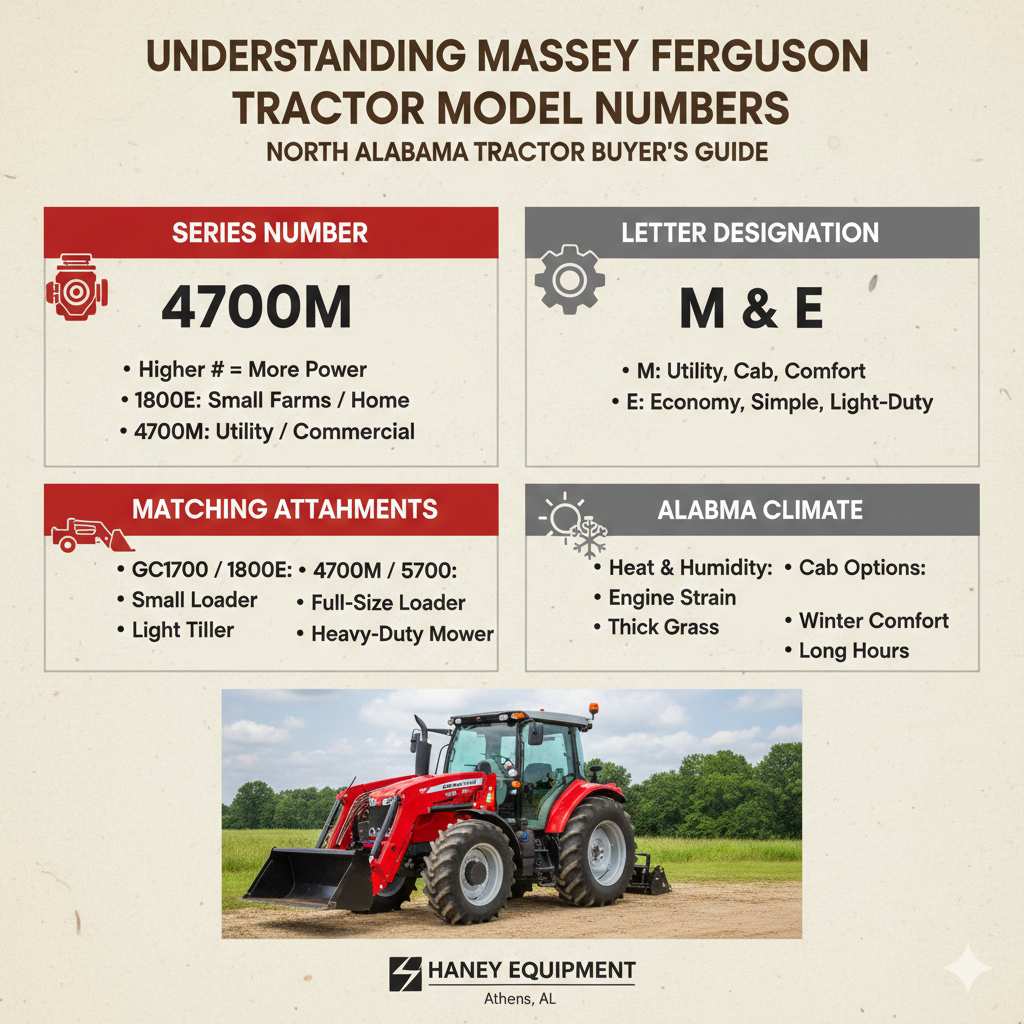 |
If you’ve ever walked through a tractor lot in North Alabama, you’ve probably noticed all the confusing numbers on Massey Ferguson machines. Understanding model numbers is a practical way to pick a tractor that fits your land, workload, and attachments. Whether you’re managing a hobby farm in Athens, working a poultry operation in Cullman, or clearing pastures in Madison, knowing what the numbers and letters represent can save time and money in equal parts. Explaining Numbers and Letters Massey Ferguson model numbers are designed to give you a snapshot of the tractor’s series, and general capabilities. The system isn’t random; it’s a coding method that, once understood, makes choosing the right machine much easier. For example, tractors in the 4700M Series are medium-to-heavy duty utility tractors, suited for a mix of loader work and landscape maintenance. On the other hand, sub-compact models like the GC1700 are built for lighter work such as maintaining long driveways, small fields, or landscaping tasks on residential properties. The first part of a model number typically indicates the series. Series numbers reflect the horsepower range and intended purpose of the tractor. Higher numbers usually mean larger, more powerful machines. A 1800E or GC1700 series, for instance, is ideal for smaller acreage or residential use. |
If you’ve ever walked through a tractor lot in North Alabama, you’ve probably noticed all the confusing numbers on Massey Ferguson machines.
Understanding model numbers is a practical way to pick a tractor that fits your land, workload, and attachments. Whether you’re managing a hobby farm in Athens, working a poultry operation in Cullman, or clearing pastures in Madison, knowing what the numbers and letters represent can save time and money in equal parts.
Explaining Numbers and Letters
Massey Ferguson model numbers are designed to give you a snapshot of the tractor’s series, and general capabilities. The system isn’t random; it’s a coding method that, once understood, makes choosing the right machine much easier.
For example, tractors in the 4700M Series are medium-to-heavy duty utility tractors, suited for a mix of loader work and landscape maintenance. On the other hand, sub-compact models like the GC1700 are built for lighter work such as maintaining long driveways, small fields, or landscaping tasks on residential properties.
The first part of a model number typically indicates the series. Series numbers reflect the horsepower range and intended purpose of the tractor. Higher numbers usually mean larger, more powerful machines. A 1800E or GC1700 series, for instance, is ideal for smaller acreage or residential use.
The Letters
Letters following the series number offer additional insight. “M” often designates utility models that balance power and versatility. These tractors are suitable for heavier residential use and small farms, offering options like cab and heat, advanced hydraulic systems, and comfortable controls.
Inversely, “E” usually stands for economy or efficiency, making these models lighter, simpler and easier to maintain; they’re perfect for hobby farms, or smaller-scale, occasional yard work. Understanding this letter system helps you narrow down your options depending on whether you prioritize comfort, power, or cost-effectiveness.
Additional Benefits
Understanding model numbers can also be a big help when planning for attachments! Whether you need a loader, mower deck, tiller, or backhoe, or any other possible add-on, knowing the series and letter designation ensures compatibility.
A sub-compact GC1700 or 1800E may handle a smaller loader or light tiller, while a 4700 or 5700 can manage a full-size loader, heavy-duty mower deck, or larger implements required for commercial poultry or cattle operations. Choosing a tractor without this understanding can lead to underpowered equipment or costly upgrades down the line.
Properties in North Alabama present their own unique challenges that make knowing model numbers especially useful, too. Mud, uneven terrain and gravel driveways can accelerate wear if you choose a machine that isn’t designed for your environment.
The same goes for seasonal considerations. For instance, tractors with cab options (often found in “M” models) make a big difference during Alabama winters or summer heat. Operators working long hours moving hay or running farm equipment will appreciate cab comfort and climate control.
Smaller “E” models without cabs are lighter and easier to maneuver, as well as being more fuel-efficient, making them ideal for short daily tasks or maintaining residential lawns during spring and summer. Matching model features to your seasonal work schedule can ensure that you get the right tractor for your environment.
Holler at Haney!
If you’re wondering which Massey Ferguson model is right for your property, stop by Haney Equipment at 1300 US-31, Athens, AL 35611! Our team can walk you through model numbers, explain differences between series and letters and, ultimately, help you match a tractor to your specific property needs. Visit us in person or explore our website to find a tractor that’s designed to handle your workload efficiently and reliably for years to come.